
For the Love of Shrimp
“Every life is valuable. It is an end in itself, not a means to an end.”
— Immanuel Kant
Shrimp is hard to beat. It permeates nearly every cuisine, is quick to cook, high in protein, low in fat, and bite-sized, making it perfect for skewers, hors d’oeuvres, or bowls. It has a distinctive texture in its firm, springy bite, is mild yet flavorful and umami-rich, which enhances savory flavor perception. From crispy tempura and shrimp scampi to the classic shrimp cocktail, it has found its way into dishes across the world.
A Global Seafood Powerhouse
The appetite for shrimp has driven a huge industry. The worldwide shrimp market is about $50 billion in size, growing at 9.5% annually.1 It is the top seafood consumed in the United States, accounting for about 38% of Americans’ annual seafood intake2 — more than tuna and salmon combined. U.S. shrimp consumption steadily climbed for decades, peaking at 5.9 lbs. per person annually3 (Japan is the highest globally at 7.23 lbs. per capita). It is among the highest traded seafood commodities globally, with rising demand across many regions. Asia-Pacific leads in production and consumption, accounting for over half of the market. The United States stands out as the largest buyer, comprising nearly 30% of global shrimp imports. Today, approximately 94% of shrimp consumed in the U.S. are imported from overseas farms.4
Production has boomed to keep pace with demand. Traditionally, shrimp were caught in the wild from oceans and coasts. But today, aquaculture (farming) supplies the majority of shrimp on the market. Of the over 9 million metric tons of shrimp produced annually,5 a majority is now farmed, surpassing wild catch. The dominant species is the Pacific whiteleg shrimp (Litopenaeus vannamei), prized for its fast growth and adaptability to crowded ponds. Leading farmed shrimp producers include countries like China, India, Ecuador, Vietnam, and Indonesia, which together account for roughly three-quarters of the world’s output. This global supply chain means that a shrimp cocktail in an American restaurant likely began life in an Asian or Latin American pond before journeying thousands of miles on ice to the plate. Shrimp and prawns are referred to interchangeably, though shrimp belong to a different suborder than prawns and have distinct gill structures and body segment overlaps. Some regions prefer to use one or the other term to refer to both.
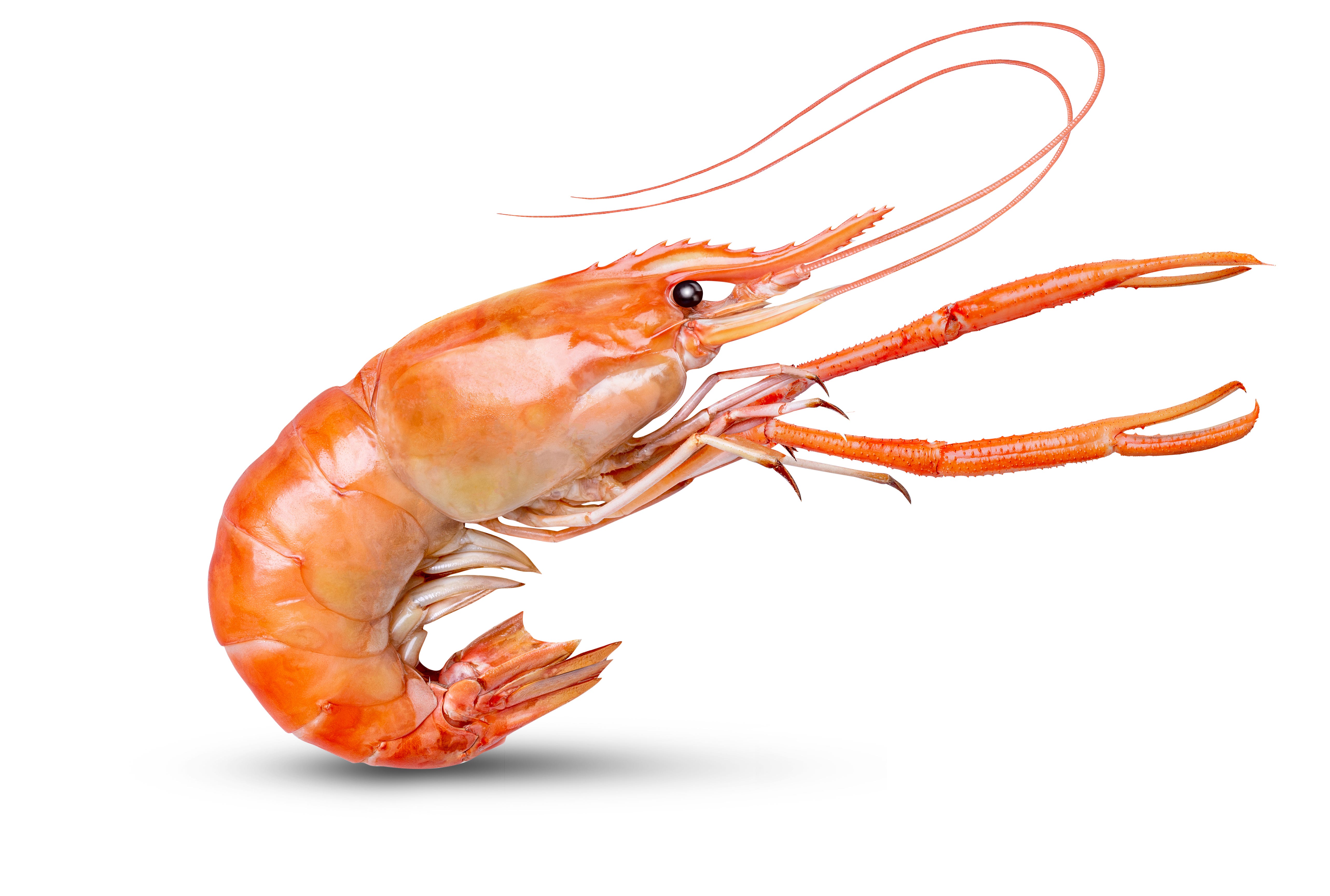
Image Credit: SizeSquares / Shutterstock
The Cost of Shrimp
For all its popularity, shrimp exacts a heavy toll on animals, people and the planet. The industry’s rapid expansion has led to problems including ethical issues in animal welfare to labor abuses to environmental degradation. Billions of animals, vulnerable workers, and fragile ecosystems are caught in the wake of the shrimp boom.
Animals
Though tiny, shrimp are animals — and they are killed in staggering numbers. More individual animals are killed for shrimp production than for any other food. About 440 billion are slaughtered every year,6 five times the number of all farmed land animals. Roughly half of all farmed animals alive at any given time are shrimp. There is growing evidence that crustaceans like shrimp are sentient and can feel pain. In 2021, the UK government formally recognized decapod crustaceans (including shrimp) as sentient beings in its animal welfare legislation,7 reflecting studies showing they have the capacity to experience pain and distress.8 Austria, Switzerland, and Norway have incorporated protections for decapods within their animal welfare frameworks.9
The way shrimp are harvested and farmed raises serious welfare concerns. In wild fisheries, shrimp are often caught by trawling, a method that drags fine-mesh nets through the ocean. Trawl nets scoop up everything in their path, leading to enormous bycatch — the unintentional capture of non-target species. Any sea creature larger than a shrimp can be ensnared, including fish, sea turtles, and other marine life. In tropical regions, the bycatch-to-shrimp ratio can be as high as 20:1, with the global average around 5:1. In other words, for every kilogram of shrimp hauled in, up to 20 kilograms of other marine life is unintentionally caught and usually discarded dead.10
On shrimp farms, these animals face a myriad of welfare issues. Intensive shrimp aquaculture often stocks crustaceans at very high densities in ponds or tanks. Disease outbreaks are common, and to prevent losses farmers may dose ponds with chemicals and antibiotics (more on the environmental impact of this later). One routine farming practice is eyestalk ablation in breeding females — essentially removing or cutting a female shrimp’s eye stalk, which induces more predictable egg production. This cruel procedure is done without anesthesia and is standard in many hatcheries to maximize reproduction, despite obvious suffering caused to the animal. Farmed shrimp are typically harvested by draining ponds and then immersing the shrimp in ice slurry to kill them, a process that can take many minutes of chilling (effectively a form of live freezing) despite the availability of more humane alternatives such as electrical stunning technology. Andrés Jiménez Zorrilla, Co-Founder of the Shrimp Welfare Project, details a chilling account of current practices.
People
Shrimp’s hidden costs extend to humans as well, impacting worker rights and human welfare. The pressure to keep costs low is continuously felt through the supply chain with its vulnerable laborers. Investigations have revealed serious labor abuses in parts of the shrimp industry, especially in some developing countries that export to the U.S. and Europe. In 2015, an Associated Press (AP) investigation exposed a shocking pipeline of forced labor in Thai shrimp processing. The AP found that migrant workers and children were being sold to factories in Thailand to work under horrific conditions.11 A recent exposé from India — the source of 40% of the shrimp consumed in the U.S. — uncovered a brutal industry rife with forced labor, environmental abuses, and food safety violations hidden behind falsified audits.12 Other reports have documented modern slavery on fishing vessels catching seafood, debt bondage of workers, and dangerous conditions in processing plants around the world.13 Shrimp are often farmed in one country, processed in another, and shipped to a third, creating a complex web where labor abuses can hide. The push for traceability and ethical certification in seafood is only a few years old, and significant gaps remain.
Beyond labor, food safety and fraud issues also plague the conventional shrimp market. Shrimp are frequently treated with chemicals like sodium tripolyphosphate (STPP) to retain water weight, or with antibiotics and preservatives to prevent spoilage in transit. Several countries have had to reject shrimp imports due to excess antibiotic residues or banned chemicals. Mislabeling is another concern — one Guardian investigation found rampant seafood fraud and mislabeling, meaning consumers often weren’t even eating the species they think they bought.14 The human dimensions of shrimp production span labor exploitation, economic inequality (small-scale fishers often struggle against industrial farms), and consumer protection issues, all of which cast a shadow on the shrimp on our plate.
Planet
Perhaps the starkest impacts are on the environment. Shrimp might be a tiny creature, but catching and farming shrimp is an enormously resource-intensive and polluting enterprise. Studies have found that shrimp (along with lobster) are among the most carbon-intensive proteins on the planet. On average, producing 1 kilogram of shrimp emits about 13 kg of CO₂ equivalent, roughly double the footprint of pork or chicken.15 One analysis by University of Oxford researchers showed that tropical farmed shrimp can have a carbon footprint up to ten times higher than beef from cattle raised on deforested Amazon land.16 Our collective shrimp appetite is literally warming the planet.
Carbon is only part of the story. Habitat destruction is the original sin of shrimp aquaculture. Shrimp farming’s rise from the 1980s onward led to bulldozing of coastal mangrove forests across Southeast Asia and Latin America. These mangroves are ecological gold: they protect coasts from storms, nurture fish nurseries, and sequester huge amounts of carbon in their tangled roots. Yet during the aquaculture boom, vast swathes were cleared to dig ponds for shrimp. It’s estimated that about 30% to 50% of global mangrove forests have been lost, and a major driver has been shrimp aquaculture expansion.17 This is an environmental double whammy — not only does it release stored carbon (contributing to climate change), but it also destroys biodiversity hotspots and weakens coastline resilience. The industry has left a patchwork of abandoned, polluted shrimp ponds in places like Thailand and Indonesia, areas that were once thriving green mangrove forests now turned into muddy, acidified expanses where even shrimp can no longer be raised after disease outbreaks.
Water pollution is another major concern. Intensive shrimp farms often rely on regular doses of antibiotics, pesticides, and disinfectants to control diseases in crowded ponds. These chemicals, along with concentrated wastes and excess feed, are periodically discharged into surrounding waterways or coastal oceans. The result is eutrophication and dead zones near some farming clusters, where algal blooms fueled by nutrient runoff sap the water of oxygen and kill marine life. Although regulations in the U.S. and EU have banned many of the worst aquaculture drugs, enforcement and standards are uneven or inconsistent. Canada prohibits some antibiotic levels 100 times less than the U.S.18 Even when farms obey the rules, the effluent loaded with nitrogen, phosphorus, and organic matter can devastate local ecosystems, smothering coral reefs and seagrass beds near shrimp farming zones. In essence, industrial shrimp production is wasteful and polluting by design.
Both wild shrimp fisheries and shrimp aquaculture have ecological consequences with one of the highest environmental footprints per pound of protein produced, once factors like bycatch, habitat destruction, and climate emissions are considered. Bottom trawling for shrimp wreaks havoc on marine ecosystems. Trawl nets dragged along the seabed destroy fragile habitats like coral reefs and seagrass beds, kicking up sediments and disrupting the ocean floor. This practice has been likened to clear-cutting a forest — but underwater. Fragile seabed ecosystems can take decades to recover, if they recover at all. While there are ways to manage and minimize damage (e.g. restricting trawling areas), poorly managed shrimp trawls have caused severe degradation of benthic (seafloor) environments. From ocean to plate, conventional shrimp carries a hefty environmental footprint, prompting urgent calls for transformation.
The Rise of (Alternative) Shrimp
Efforts are underway to create shrimp without the shrimp — products that aim to recreate the taste and texture of shrimp without relying on wild catches or factory farms. The goal is ambitious: deliver the same taste, texture, and culinary versatility of shrimp — the juicy bite of a prawn in garlic butter, the delicate sweetness in a sushi roll — using animal-free ingredients or novel technologies. Several approaches are being pursued, each with its own promise and challenges:
Plant-based
The first wave of alt-seafood companies focused on plant-derived shrimp analogues. These products typically use combinations of seaweed, plant proteins, and vegetable starches to mimic the flavor and texture of real shrimp.19 The U.S. startup New Wave Foods developed a shrimp made from red algae (for an authentic ocean taste) and mung bean protein. After the company ceased operations, Big Idea Ventures acquired the intellectual property to launch Bayou Best Foods, focusing on plant-based shrimp.20 Another startup, The Plant Based Seafood Co., offers a line of ‘Mind Blown’ shrimp made with konjac and seasoned breading.21 In Europe and Asia, products like Vegan Zeastar shrimp (Netherlands), Jens Møller Products Cavi.art (Denmark), and Growthwell’s HAPPIEE! plant-based prawns (Singapore) are providing more choices for consumers seeking a shrimp substitute. Nestle and Thai Union have also ventured into the segment with their Vrimp and OMG Meat brands, respectively.
Innovative companies are even combining methods, such as 3D printing plant proteins to achieve sophisticated textures. In 2024, an Israeli company, Steakholder Foods, announced it had successfully 3D-printed a plant-based shrimp using a proprietary food printer.22 The system deposits layers of plant protein “inks”, including a shrimp-flavored algae-based ink, to create something virtually indistinguishable from a natural shrimp in appearance and mouthfeel. This approach may also enable hybrid products — for instance, combining cultivated shrimp cells with plant gels to get the best of both worlds (authentic flavor and fibrous structure).
Fermentation
Fermentation has the potential to deliver a seafood-like umami flavor and fibrous texture. Though still in R&D, these fermentation-derived shrimp aim to offer a clean, protein-rich product with minimal processing. Companies like Aqua Cultured Foods have utilized fermentation technology to create alternative shrimp.23 Innovators are also exploring algal fermentation to produce marine flavors and proteins that can enhance plant-based seafood. This technique harnesses microorganisms to produce the very compounds that give shrimp its taste, but without harvesting any marine animals.
Cultivated
Cell-based shrimp could offer the ultimate sustainable luxury — real shrimp taste and nutrition, but free from antibiotics, sea lice, and ocean contaminants. Early entrants such as Shiok Meats paved the way for future companies to advance the segment. Shiok’s approach isolated cells from shrimp and grew them in bioreactors, feeding them nutrients so they multiply into muscle tissue. Shiok Meats merged with another startup, Umami Bioworks, in a bid to combine forces and overcome technical hurdles.24 CellMEAT has demonstrated scale-up production of cultivated shrimp to several kilograms per day in pilot facilities, and is seeking regulatory approval. However, the science is still being refined to bring down costs and increase volumes.
A Long Voyage Ahead
Despite the excitement, alternative shrimp faces significant challenges before it can make a dent in the conventional shrimp market. Replicating shrimp is, in some ways, a tougher technical feat than making a beef burger substitute. Shrimp have a distinct ‘snap’ to their bite, a mild but unmistakably oceanic flavor, and they turn from gray translucent to pink and firm when cooked — properties that are tricky to emulate. Key hurdles for alt-shrimp include:
Authentic Texture and Flavor: Achieving the bouncy, snappy texture of shrimp is a complex formulation problem. Plant-based versions use hydrocolloids and proteins to try to mimic that muscle structure, but some early products have been criticized for being too soft or not flaky enough. Matching the subtle sweetness and briny taste is equally challenging, often requiring seaweed extracts or fermentation-based flavors.
Price and Scale: Today, alternative shrimp is more expensive to produce than farmed shrimp — and in the case of cell-cultured shrimp, significantly more expensive at pilot scale. Cultivated shrimp meat is still in the R&D phase with costs estimated in the hundreds of dollars per kilogram. Reaching price parity will require scaling up production, optimizing ingredient costs (such as finding cheaper plant proteins or growth media for cells), and achieving greater economies of scale.
Consumer Acceptance: Plant-based shrimp needs to overcome both awareness (“I didn’t know there’s a vegan shrimp option”) and perception (“will this taste good?”). Surveys indicate seafood eaters are open to trying sustainable alternatives for environmental or health reasons, especially flexitarians. But the product must deliver on taste. For cell-based shrimp, an additional hurdle is regulatory approval and psychological acceptance — some consumers still feel uneasy about ‘lab-grown’ food (the so-called yuck factor). Public education and transparent marketing will be key, emphasizing the cleanliness and benefits of the product (no mercury, no antibiotics, etc.).
Nutritional Profile: Another consideration is matching the nutritional profile of shrimp. Shrimp are low in calories, high in protein, offer a source of omega-3 fatty acids and micronutrients like selenium and B12. Plant-based shrimp makers are working to fortify products with similar nutrition — for instance, adding algal oil to provide omega-3 DHA (since many people eat seafood for the omega-3 benefits).
Culinary Profile: Achieving a clean label with healthy ingredients is a balancing act alongside functional requirements. Moreover, alternative shrimp must perform in a variety of cooking applications — from frying to grilling — without falling apart or losing their intended texture. This versatility is crucial if they are to replace shrimp in all the beloved recipes.
Good Food Institute (GFI) notes that the seafood analog category is where plant-based meats were about 5-8 years ago. A wave of seafood innovation has the potential to make shrimp alternatives widely available.
For the Love of Shrimp
Shrimp are small creatures that loom large in our food culture. Their production carries outsized environmental consequences. Our global lust for shrimp is being fed by methods that extract a steep cost: billions of animals endure pain or death, vulnerable workers face exploitation, and precious ecosystems are damaged. Yet, it’s clear that people aren’t going to simply stop eating the world’s favorite seafood overnight. That is why the rise of alternative shrimp is so timely and important. Progress may be incremental at first, but momentum is building. The alternative seafood sector overall has raised over $500 million in funding, but sales are still meager.
The pioneers in this space — from scientists growing shrimp meat in labs to chefs crafting plant-based shrimp tacos — are driven by the idea that we don’t have to choose between our palate and our planet. As we’ve seen with alternative milk, consumer habits can change when given attractive, viable alternatives. Alternative shrimp products must clear the bar of taste, price, nutrition and convenience to truly compete with conventional shrimp. They will need to match the decades of culinary familiarity that real shrimp enjoy. As we prepare for a world of 10 billion people by mid-century, the need for sustainable protein sources has never been more urgent. Shrimp, as the planet’s most consumed seafood, is a critical piece of this puzzle.